

Fully Funded
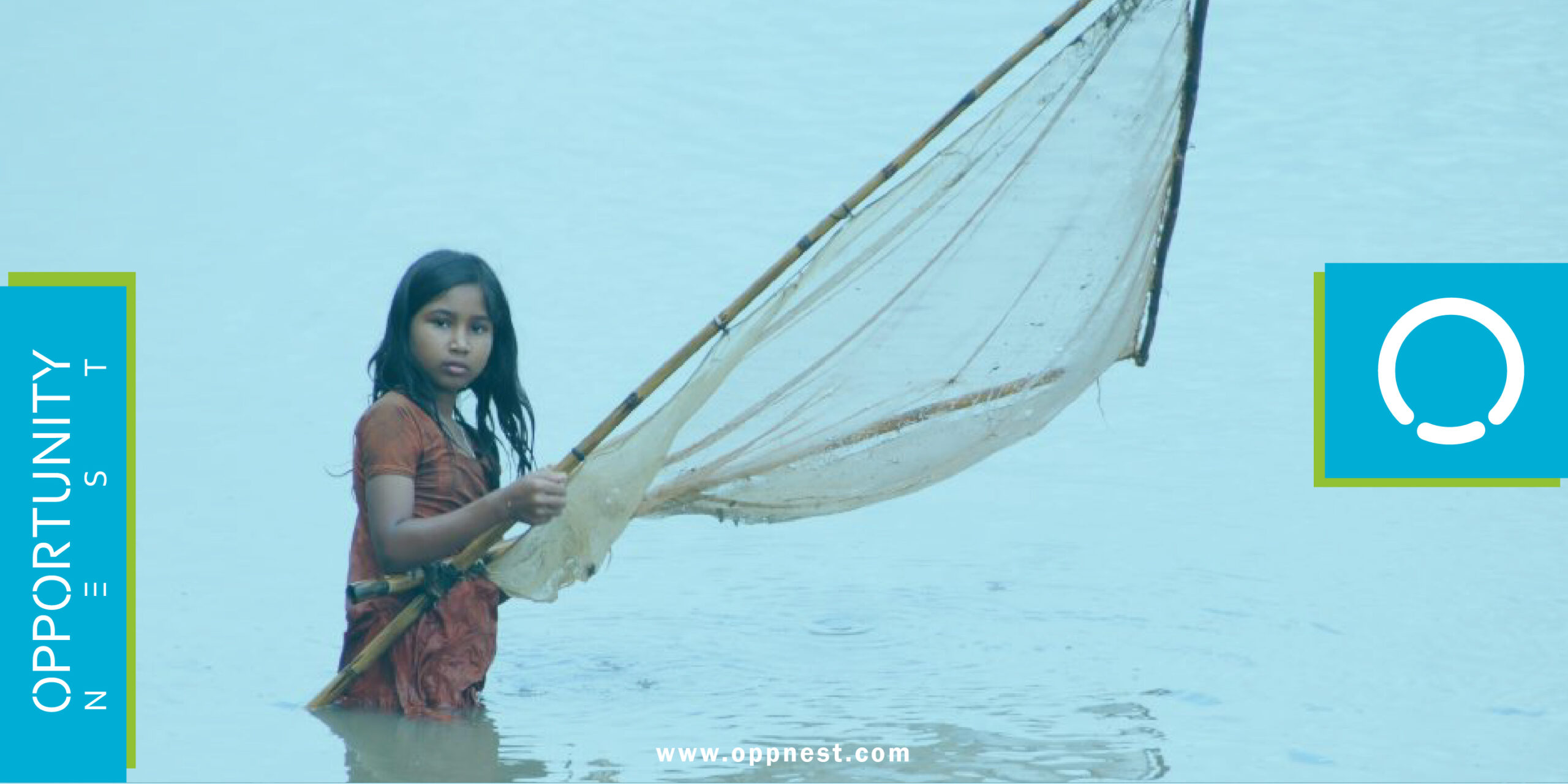
USAID’s RISE: A Challenge to Address Gender-Based Violence in the Environment
Share on
Opportunity Type
Competition
Fully Funded
Description
Gender-based violence (GBV) is estimated to affect more than one in three women worldwide. This widespread problem takes a variety of forms, including sexual, psychological, community, economic, institutional, and intimate partner violence, and in turn affects nearly every aspect of a person’s life, including health, education, and economic and political opportunities. At the same time, environmental degradation, loss of ecosystem benefits, and unsustainable resource use are creating complex crises worldwide. As billions of people rely on these natural resources and ecosystems to sustain themselves, the potential human impacts are dire, with disproportionate effects on women and girls.
USAID has reopened the RISE Challenge in order to identify and fund the innovative application of promising or proven interventions that prevent and respond to gender-based violence across programs that address the access, use, control, and management of natural resource.
Responding to GBV can provide opportunities for both enhanced environmental action and women’s empowerment, but tackling one issue without addressing the other is unlikely to succeed. USAID’s RISE Challenge aims to identify and implement interventions to reduce GBV in environmental programming.
This challenge aims to fund organizations to innovatively adapt and implement promising or proven practices that have been used to effectively prevent and respond to GBV in other sectors to environmental programming. The challenge will draw insights from other development and humanitarian sectors that have proven or promising practices to address GBV. It incentivizes partnerships between environmental organizations, local communities, indigenous peoples organizations, and gender and GBV experts who can help bridge knowledge gaps and work to build an evidence base of effective GBV interventions.
It also aims to celebrate and spur a broad range of interventions that are sustainable and integrable into USAID and partners’ environmental programming and investments.
Eligibilities
Applicants must meet the following requirements to participate in the RISE Challenge. All applications will undergo an initial eligibility screening to ensure they comply with the eligibility criteria.
- Organization type: RISE is open to all organizations regardless of type (e.g. NGO; for profit; not-for-profit; national, regional, community and indigenous peoples organizations; universities; foundations; faith-based organizations; women-owned/women-led enterprises).
- Organization size: All organizations regardless of size are eligible to apply.
- Partnership model: Applicants must demonstrate a partnership model that leverages the capacity, expertise, and existing relationships across relevant environmental sector organizations, gender and GBV organizations, indigenous peoples organizations, relevant experts, and local communities for the geography and sector of interest. Partnerships with research, academic, or evaluation organizations with the capacity to support evidence collection are also highly encouraged. The RISE Challenge requires supporting documentation to verify partnerships.
- Local presence: All applicants must use the funds to implement interventions in geographies where USAID is currently operational. Applicants must either already have a presence in that country or must have a local partner. See partnership model requirement above. The RISE Challenge will require supporting documentation to demonstrate legal status to operate where the intervention is taking place.
- Willingness to capture and share evidence and learning: All applicants need to describe a clear and actionable plan for Monitoring, Evaluation, and Learning that articulates how the applicant will test hypotheses, generate evidence, and use learning to adapt programming, which will feed into the evidence base that USAID is creating. Sharing learning includes sensitively balancing being transparent about sharing setbacks while protecting vulnerable populations from exposure to harm. Grantees will be expected to participate in ongoing reporting, peer-to-peer learning, and may be asked to contribute to the development of open-source tools. All people-level indicators must be sex-disaggregated.
- Topical: Applicants should present interventions that address the objectives of the Program Statement outlined in Section A of the Request for Applications.
- Gender analysis: We strongly encourage all applicants to complete a rigorous gender analysis prior to applying. Successful awardees who have yet to complete a gender analysis will be required to do so as one of their initial activities under the grant.
- Eligible to receive USAID funds: Catalyst will conduct a responsibility determination prior to award, to ensure the applicant has the organizational and technical capacity to manage a USAID funded project.
- Language: Applicants must submit their entries in English. While entries will be decided on the strength of the content, we encourage applicants to invest in translation or have someone with strong English skills review their submission to ensure they are showing their work to their best advantage.
- Completeness and timeliness: Entries will not be assessed if all required fields have not been completed. This applies to any stage of submission and also relates to missing documentation that may have been requested. Late entries may not be accepted.
Ineligible applicants:
The following organizations are not eligible for the RISE Challenge:
- Organizations that have previously received RISE Challenge funding;
- Political parties, groupings, or institutions, or their subsidiaries or affiliates;
- Organizations that appear on the List of Parties Excluded from Federal Procurement and Non-procurement Programs, U.N. 1267 list, or have an active restriction or exclusion on the SAM list;
- Organizations that advocate, promote, or engage in illegal activities or anti-democratic activities;
- Any entity that has been found to have misused USAID funds in the past;
- Any entity affiliated with USAID or Resonance, its officers, directors, employees, the Catalyst Project, or their family members;
- Any governmental organization; and
- Individuals.
Benefits
- For winners of this challenge, USAID will feature their interventions, facilitate access to funding and networking opportunities, and provide technical assistance to support the proposed activity in achieving measurable results and impact.
- USAID will award up to three Fixed Amount Awards (FAA) between $100,000 and $300,000, subject to the availability of funding. Each FAA will be funded based on milestones and an implementation plan that are mutually agreed upon. Grant-funded activities must be completed within one to two years. (Challenge winners will be announced by December 2020)
Program Venue
Online Submission
Online
Eligible Regions
Eligible Countries
Application Process
The documents required for your application can be found in the three tabs of the spreadsheet linked below. Download the spreadsheet to use it as a template.
Detailed Budget, Milestone Deliverable Table, and Activity Plan
ADDITIONAL INFORMATION
After an internal eligibility screen, expert judges will review the remaining applications and assess them against the judging criteria listed on this website. Finalists will be interviewed by a panel of USAID staff and affiliated partners.
USAID RISE Challenge winners will be announced during 16-days of activism against gender-based violence. (December, 2020)
Grant-funded implementation of solutions and approaches must be completed within 18 months. (December, 2020 – June, 2022)
Request for Applications 2020:
https://drive.google.com/file/d/1EckiICMZ3ZNpmRC4zNlohS0QHUl6lOl2/view?usp=sharing
Share on
Fully Funded
USAID’s RISE: A Challenge to Address Gender-Based Violence in the Environment
Share on
Opportunity Type
Competition
Full Time
Description
Gender-based violence (GBV) is estimated to affect more than one in three women worldwide. This widespread problem takes a variety of forms, including sexual, psychological, community, economic, institutional, and intimate partner violence, and in turn affects nearly every aspect of a person’s life, including health, education, and economic and political opportunities. At the same time, environmental degradation, loss of ecosystem benefits, and unsustainable resource use are creating complex crises worldwide. As billions of people rely on these natural resources and ecosystems to sustain themselves, the potential human impacts are dire, with disproportionate effects on women and girls.
USAID has reopened the RISE Challenge in order to identify and fund the innovative application of promising or proven interventions that prevent and respond to gender-based violence across programs that address the access, use, control, and management of natural resource.
Responding to GBV can provide opportunities for both enhanced environmental action and women’s empowerment, but tackling one issue without addressing the other is unlikely to succeed. USAID’s RISE Challenge aims to identify and implement interventions to reduce GBV in environmental programming.
This challenge aims to fund organizations to innovatively adapt and implement promising or proven practices that have been used to effectively prevent and respond to GBV in other sectors to environmental programming. The challenge will draw insights from other development and humanitarian sectors that have proven or promising practices to address GBV. It incentivizes partnerships between environmental organizations, local communities, indigenous peoples organizations, and gender and GBV experts who can help bridge knowledge gaps and work to build an evidence base of effective GBV interventions.
It also aims to celebrate and spur a broad range of interventions that are sustainable and integrable into USAID and partners’ environmental programming and investments.
Eligibilities
Applicants must meet the following requirements to participate in the RISE Challenge. All applications will undergo an initial eligibility screening to ensure they comply with the eligibility criteria.
- Organization type: RISE is open to all organizations regardless of type (e.g. NGO; for profit; not-for-profit; national, regional, community and indigenous peoples organizations; universities; foundations; faith-based organizations; women-owned/women-led enterprises).
- Organization size: All organizations regardless of size are eligible to apply.
- Partnership model: Applicants must demonstrate a partnership model that leverages the capacity, expertise, and existing relationships across relevant environmental sector organizations, gender and GBV organizations, indigenous peoples organizations, relevant experts, and local communities for the geography and sector of interest. Partnerships with research, academic, or evaluation organizations with the capacity to support evidence collection are also highly encouraged. The RISE Challenge requires supporting documentation to verify partnerships.
- Local presence: All applicants must use the funds to implement interventions in geographies where USAID is currently operational. Applicants must either already have a presence in that country or must have a local partner. See partnership model requirement above. The RISE Challenge will require supporting documentation to demonstrate legal status to operate where the intervention is taking place.
- Willingness to capture and share evidence and learning: All applicants need to describe a clear and actionable plan for Monitoring, Evaluation, and Learning that articulates how the applicant will test hypotheses, generate evidence, and use learning to adapt programming, which will feed into the evidence base that USAID is creating. Sharing learning includes sensitively balancing being transparent about sharing setbacks while protecting vulnerable populations from exposure to harm. Grantees will be expected to participate in ongoing reporting, peer-to-peer learning, and may be asked to contribute to the development of open-source tools. All people-level indicators must be sex-disaggregated.
- Topical: Applicants should present interventions that address the objectives of the Program Statement outlined in Section A of the Request for Applications.
- Gender analysis: We strongly encourage all applicants to complete a rigorous gender analysis prior to applying. Successful awardees who have yet to complete a gender analysis will be required to do so as one of their initial activities under the grant.
- Eligible to receive USAID funds: Catalyst will conduct a responsibility determination prior to award, to ensure the applicant has the organizational and technical capacity to manage a USAID funded project.
- Language: Applicants must submit their entries in English. While entries will be decided on the strength of the content, we encourage applicants to invest in translation or have someone with strong English skills review their submission to ensure they are showing their work to their best advantage.
- Completeness and timeliness: Entries will not be assessed if all required fields have not been completed. This applies to any stage of submission and also relates to missing documentation that may have been requested. Late entries may not be accepted.
Ineligible applicants:
The following organizations are not eligible for the RISE Challenge:
- Organizations that have previously received RISE Challenge funding;
- Political parties, groupings, or institutions, or their subsidiaries or affiliates;
- Organizations that appear on the List of Parties Excluded from Federal Procurement and Non-procurement Programs, U.N. 1267 list, or have an active restriction or exclusion on the SAM list;
- Organizations that advocate, promote, or engage in illegal activities or anti-democratic activities;
- Any entity that has been found to have misused USAID funds in the past;
- Any entity affiliated with USAID or Resonance, its officers, directors, employees, the Catalyst Project, or their family members;
- Any governmental organization; and
- Individuals.
Benefits
- For winners of this challenge, USAID will feature their interventions, facilitate access to funding and networking opportunities, and provide technical assistance to support the proposed activity in achieving measurable results and impact.
- USAID will award up to three Fixed Amount Awards (FAA) between $100,000 and $300,000, subject to the availability of funding. Each FAA will be funded based on milestones and an implementation plan that are mutually agreed upon. Grant-funded activities must be completed within one to two years. (Challenge winners will be announced by December 2020)
Program Venue
Online Submission
Eligible Regions
Eligible Countries
Application Process
The documents required for your application can be found in the three tabs of the spreadsheet linked below. Download the spreadsheet to use it as a template.
Detailed Budget, Milestone Deliverable Table, and Activity Plan
ADDITIONAL INFORMATION
After an internal eligibility screen, expert judges will review the remaining applications and assess them against the judging criteria listed on this website. Finalists will be interviewed by a panel of USAID staff and affiliated partners.
USAID RISE Challenge winners will be announced during 16-days of activism against gender-based violence. (December, 2020)
Grant-funded implementation of solutions and approaches must be completed within 18 months. (December, 2020 – June, 2022)
Request for Applications 2020:
https://drive.google.com/file/d/1EckiICMZ3ZNpmRC4zNlohS0QHUl6lOl2/view?usp=sharing
Share on
Fully Funded
USAID’s RISE: A Challenge to Address Gender-Based Violence in the Environment
Share on
Opportunity Type
Competition
Select Type
Description
Gender-based violence (GBV) is estimated to affect more than one in three women worldwide. This widespread problem takes a variety of forms, including sexual, psychological, community, economic, institutional, and intimate partner violence, and in turn affects nearly every aspect of a person’s life, including health, education, and economic and political opportunities. At the same time, environmental degradation, loss of ecosystem benefits, and unsustainable resource use are creating complex crises worldwide. As billions of people rely on these natural resources and ecosystems to sustain themselves, the potential human impacts are dire, with disproportionate effects on women and girls.
USAID has reopened the RISE Challenge in order to identify and fund the innovative application of promising or proven interventions that prevent and respond to gender-based violence across programs that address the access, use, control, and management of natural resource.
Responding to GBV can provide opportunities for both enhanced environmental action and women’s empowerment, but tackling one issue without addressing the other is unlikely to succeed. USAID’s RISE Challenge aims to identify and implement interventions to reduce GBV in environmental programming.
This challenge aims to fund organizations to innovatively adapt and implement promising or proven practices that have been used to effectively prevent and respond to GBV in other sectors to environmental programming. The challenge will draw insights from other development and humanitarian sectors that have proven or promising practices to address GBV. It incentivizes partnerships between environmental organizations, local communities, indigenous peoples organizations, and gender and GBV experts who can help bridge knowledge gaps and work to build an evidence base of effective GBV interventions.
It also aims to celebrate and spur a broad range of interventions that are sustainable and integrable into USAID and partners’ environmental programming and investments.
Eligibilities
Applicants must meet the following requirements to participate in the RISE Challenge. All applications will undergo an initial eligibility screening to ensure they comply with the eligibility criteria.
- Organization type: RISE is open to all organizations regardless of type (e.g. NGO; for profit; not-for-profit; national, regional, community and indigenous peoples organizations; universities; foundations; faith-based organizations; women-owned/women-led enterprises).
- Organization size: All organizations regardless of size are eligible to apply.
- Partnership model: Applicants must demonstrate a partnership model that leverages the capacity, expertise, and existing relationships across relevant environmental sector organizations, gender and GBV organizations, indigenous peoples organizations, relevant experts, and local communities for the geography and sector of interest. Partnerships with research, academic, or evaluation organizations with the capacity to support evidence collection are also highly encouraged. The RISE Challenge requires supporting documentation to verify partnerships.
- Local presence: All applicants must use the funds to implement interventions in geographies where USAID is currently operational. Applicants must either already have a presence in that country or must have a local partner. See partnership model requirement above. The RISE Challenge will require supporting documentation to demonstrate legal status to operate where the intervention is taking place.
- Willingness to capture and share evidence and learning: All applicants need to describe a clear and actionable plan for Monitoring, Evaluation, and Learning that articulates how the applicant will test hypotheses, generate evidence, and use learning to adapt programming, which will feed into the evidence base that USAID is creating. Sharing learning includes sensitively balancing being transparent about sharing setbacks while protecting vulnerable populations from exposure to harm. Grantees will be expected to participate in ongoing reporting, peer-to-peer learning, and may be asked to contribute to the development of open-source tools. All people-level indicators must be sex-disaggregated.
- Topical: Applicants should present interventions that address the objectives of the Program Statement outlined in Section A of the Request for Applications.
- Gender analysis: We strongly encourage all applicants to complete a rigorous gender analysis prior to applying. Successful awardees who have yet to complete a gender analysis will be required to do so as one of their initial activities under the grant.
- Eligible to receive USAID funds: Catalyst will conduct a responsibility determination prior to award, to ensure the applicant has the organizational and technical capacity to manage a USAID funded project.
- Language: Applicants must submit their entries in English. While entries will be decided on the strength of the content, we encourage applicants to invest in translation or have someone with strong English skills review their submission to ensure they are showing their work to their best advantage.
- Completeness and timeliness: Entries will not be assessed if all required fields have not been completed. This applies to any stage of submission and also relates to missing documentation that may have been requested. Late entries may not be accepted.
Ineligible applicants:
The following organizations are not eligible for the RISE Challenge:
- Organizations that have previously received RISE Challenge funding;
- Political parties, groupings, or institutions, or their subsidiaries or affiliates;
- Organizations that appear on the List of Parties Excluded from Federal Procurement and Non-procurement Programs, U.N. 1267 list, or have an active restriction or exclusion on the SAM list;
- Organizations that advocate, promote, or engage in illegal activities or anti-democratic activities;
- Any entity that has been found to have misused USAID funds in the past;
- Any entity affiliated with USAID or Resonance, its officers, directors, employees, the Catalyst Project, or their family members;
- Any governmental organization; and
- Individuals.
Benefits
- For winners of this challenge, USAID will feature their interventions, facilitate access to funding and networking opportunities, and provide technical assistance to support the proposed activity in achieving measurable results and impact.
- USAID will award up to three Fixed Amount Awards (FAA) between $100,000 and $300,000, subject to the availability of funding. Each FAA will be funded based on milestones and an implementation plan that are mutually agreed upon. Grant-funded activities must be completed within one to two years. (Challenge winners will be announced by December 2020)
Program Venue
Online Submission
Eligible Regions
Eligible Countries
Application Process
The documents required for your application can be found in the three tabs of the spreadsheet linked below. Download the spreadsheet to use it as a template.
Detailed Budget, Milestone Deliverable Table, and Activity Plan
ADDITIONAL INFORMATION
After an internal eligibility screen, expert judges will review the remaining applications and assess them against the judging criteria listed on this website. Finalists will be interviewed by a panel of USAID staff and affiliated partners.
USAID RISE Challenge winners will be announced during 16-days of activism against gender-based violence. (December, 2020)
Grant-funded implementation of solutions and approaches must be completed within 18 months. (December, 2020 – June, 2022)
Request for Applications 2020:
https://drive.google.com/file/d/1EckiICMZ3ZNpmRC4zNlohS0QHUl6lOl2/view?usp=sharing
Share on
Fully Funded
Opening Date
USAID’s RISE: A Challenge to Address Gender-Based Violence in the Environment

FUNDING TYPE
Description
Gender-based violence (GBV) is estimated to affect more than one in three women worldwide. This widespread problem takes a variety of forms, including sexual, psychological, community, economic, institutional, and intimate partner violence, and in turn affects nearly every aspect of a person’s life, including health, education, and economic and political opportunities. At the same time, environmental degradation, loss of ecosystem benefits, and unsustainable resource use are creating complex crises worldwide. As billions of people rely on these natural resources and ecosystems to sustain themselves, the potential human impacts are dire, with disproportionate effects on women and girls.
USAID has reopened the RISE Challenge in order to identify and fund the innovative application of promising or proven interventions that prevent and respond to gender-based violence across programs that address the access, use, control, and management of natural resource.
Responding to GBV can provide opportunities for both enhanced environmental action and women’s empowerment, but tackling one issue without addressing the other is unlikely to succeed. USAID’s RISE Challenge aims to identify and implement interventions to reduce GBV in environmental programming.
This challenge aims to fund organizations to innovatively adapt and implement promising or proven practices that have been used to effectively prevent and respond to GBV in other sectors to environmental programming. The challenge will draw insights from other development and humanitarian sectors that have proven or promising practices to address GBV. It incentivizes partnerships between environmental organizations, local communities, indigenous peoples organizations, and gender and GBV experts who can help bridge knowledge gaps and work to build an evidence base of effective GBV interventions.
It also aims to celebrate and spur a broad range of interventions that are sustainable and integrable into USAID and partners’ environmental programming and investments.
BENIFITS
- For winners of this challenge, USAID will feature their interventions, facilitate access to funding and networking opportunities, and provide technical assistance to support the proposed activity in achieving measurable results and impact.
- USAID will award up to three Fixed Amount Awards (FAA) between $100,000 and $300,000, subject to the availability of funding. Each FAA will be funded based on milestones and an implementation plan that are mutually agreed upon. Grant-funded activities must be completed within one to two years. (Challenge winners will be announced by December 2020)
Eligibilities
Applicants must meet the following requirements to participate in the RISE Challenge. All applications will undergo an initial eligibility screening to ensure they comply with the eligibility criteria.
- Organization type: RISE is open to all organizations regardless of type (e.g. NGO; for profit; not-for-profit; national, regional, community and indigenous peoples organizations; universities; foundations; faith-based organizations; women-owned/women-led enterprises).
- Organization size: All organizations regardless of size are eligible to apply.
- Partnership model: Applicants must demonstrate a partnership model that leverages the capacity, expertise, and existing relationships across relevant environmental sector organizations, gender and GBV organizations, indigenous peoples organizations, relevant experts, and local communities for the geography and sector of interest. Partnerships with research, academic, or evaluation organizations with the capacity to support evidence collection are also highly encouraged. The RISE Challenge requires supporting documentation to verify partnerships.
- Local presence: All applicants must use the funds to implement interventions in geographies where USAID is currently operational. Applicants must either already have a presence in that country or must have a local partner. See partnership model requirement above. The RISE Challenge will require supporting documentation to demonstrate legal status to operate where the intervention is taking place.
- Willingness to capture and share evidence and learning: All applicants need to describe a clear and actionable plan for Monitoring, Evaluation, and Learning that articulates how the applicant will test hypotheses, generate evidence, and use learning to adapt programming, which will feed into the evidence base that USAID is creating. Sharing learning includes sensitively balancing being transparent about sharing setbacks while protecting vulnerable populations from exposure to harm. Grantees will be expected to participate in ongoing reporting, peer-to-peer learning, and may be asked to contribute to the development of open-source tools. All people-level indicators must be sex-disaggregated.
- Topical: Applicants should present interventions that address the objectives of the Program Statement outlined in Section A of the Request for Applications.
- Gender analysis: We strongly encourage all applicants to complete a rigorous gender analysis prior to applying. Successful awardees who have yet to complete a gender analysis will be required to do so as one of their initial activities under the grant.
- Eligible to receive USAID funds: Catalyst will conduct a responsibility determination prior to award, to ensure the applicant has the organizational and technical capacity to manage a USAID funded project.
- Language: Applicants must submit their entries in English. While entries will be decided on the strength of the content, we encourage applicants to invest in translation or have someone with strong English skills review their submission to ensure they are showing their work to their best advantage.
- Completeness and timeliness: Entries will not be assessed if all required fields have not been completed. This applies to any stage of submission and also relates to missing documentation that may have been requested. Late entries may not be accepted.
Ineligible applicants:
The following organizations are not eligible for the RISE Challenge:
- Organizations that have previously received RISE Challenge funding;
- Political parties, groupings, or institutions, or their subsidiaries or affiliates;
- Organizations that appear on the List of Parties Excluded from Federal Procurement and Non-procurement Programs, U.N. 1267 list, or have an active restriction or exclusion on the SAM list;
- Organizations that advocate, promote, or engage in illegal activities or anti-democratic activities;
- Any entity that has been found to have misused USAID funds in the past;
- Any entity affiliated with USAID or Resonance, its officers, directors, employees, the Catalyst Project, or their family members;
- Any governmental organization; and
- Individuals.
For Further Queries:
rise@usaid.gov
Eligible Regions:
Program Venue:
APPLICATION PROCESS
The documents required for your application can be found in the three tabs of the spreadsheet linked below. Download the spreadsheet to use it as a template.
Detailed Budget, Milestone Deliverable Table, and Activity Plan
Recent Articles
-

IELTS Ultimate Guide – Preparation Tips, Format and Test Day Tips
January 29, 2021 -
Free Artist Residencies in Europe For Emerging Artists
January 21, 2021 -

How To Write A Personal Statement
December 22, 2020
Related Posts
-

FAOU Spring Internship 2021
January 18, 2021 -

-
